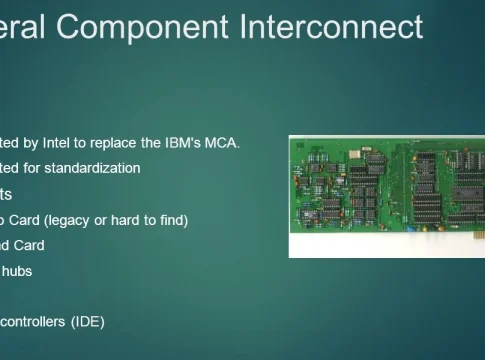
PCI, or Peripheral Component Interconnect, is a computer bus that revolutionized how peripheral devices connect to a computer’s motherboard. It established a shared data pathway between the central processing unit (CPU) and the individual controllers for these devices, found in everything from laptops to massive mainframes.
From Legacy to Dominance:
Developed by Intel in 1993, PCI quickly dethroned the older ISA and VESA Local Bus standards. Its widespread adoption stemmed from several key advantages. One of the most significant was plug-and-play functionality. Unlike its predecessors, PCI allowed devices to be automatically recognized and configured upon connection, streamlining the setup process for users.
Behind the Scenes:
The magic of PCI lies in its intelligent system firmware. This firmware meticulously examines the configuration space of each connected device and assigns resources accordingly. This includes allocating up to six memory or I/O (Input/Output) port regions to each device, ensuring they have the dedicated space they need to function properly. Additionally, some PCI devices may come equipped with ROM (Read-Only Memory) containing firmware drivers compatible with both EFI (Extensible Firmware Interface) and open firmware environments, further enhancing flexibility.
Farewell, Jumpers:
Prior to PCI, configuring expansion cards often involved a tedious process of setting jumpers on individual cards. This manual approach was prone to errors and inconsistencies. PCI addressed this by having the firmware handle interrupt assignments during configuration. This eliminated the need for physical jumpers, improved efficiency, and reduced the likelihood of configuration mistakes.
The Central Hub:
The PCI bus acts as the central nervous system for a computer’s internal connections. It serves as the critical pathway for expansion cards, storage devices, and other subsystems within the system to communicate with the CPU. While the standard PCI bus operates at 33MHz to maintain compatibility with a wider range of devices, server systems can leverage a faster 64MHz variant for enhanced performance.
Fine-Tuning Performance:
To optimize performance, each PCI device receives a unique interrupt from the system software. This dedicated interrupt ensures that the device receives instructions promptly and avoids delays caused by other devices sharing the same interrupt line. In cases where multiple devices do share an interrupt port, a built-in mechanism within PCI identifies which device the interrupt is intended for, preventing conflicts and maintaining smooth communication.
Beyond the Physical:
The PCI standard goes beyond just physical connections. It defines a comprehensive set of electrical characteristics, bus timing protocols, and supports features like bus mastering. Bus mastering empowers devices to take control of the bus for data transfers, streamlining communication and optimizing performance.
Evolving Needs, Evolving Standards:
Modern PCI implementations offer both 32-bit and 64-bit data paths with clock speeds of 33MHz or 66MHz. The latest versions even boast features for compatibility with different form factors, solidifying PCI’s position as a preferred choice for server expansion buses for many years.
However, the relentless march of technological advancement exposed the limitations of the original PCI standard. The ever-increasing speed of processors and memory demanded a solution with significantly higher bandwidth. This need birthed PCI Express (PCIe), the successor to PCI, offering a quantum leap in performance and paving the way for the next generation of computer technology.
In conclusion, while PCI has yielded the leading role to its faster sibling, PCIe, its historical significance cannot be understated. It revolutionized personal computer architecture by establishing a standardized and user-friendly method for connecting peripheral devices. For many years, PCI served as the backbone for countless computer systems, ensuring smooth operation and efficient communication between various components.